TRADESMAN Deal to Dealer Goods Tier List (1.0)
Forty-plus wares. Rank the tooltip, not the gold pile. Rarity can add a flat +5 danger.
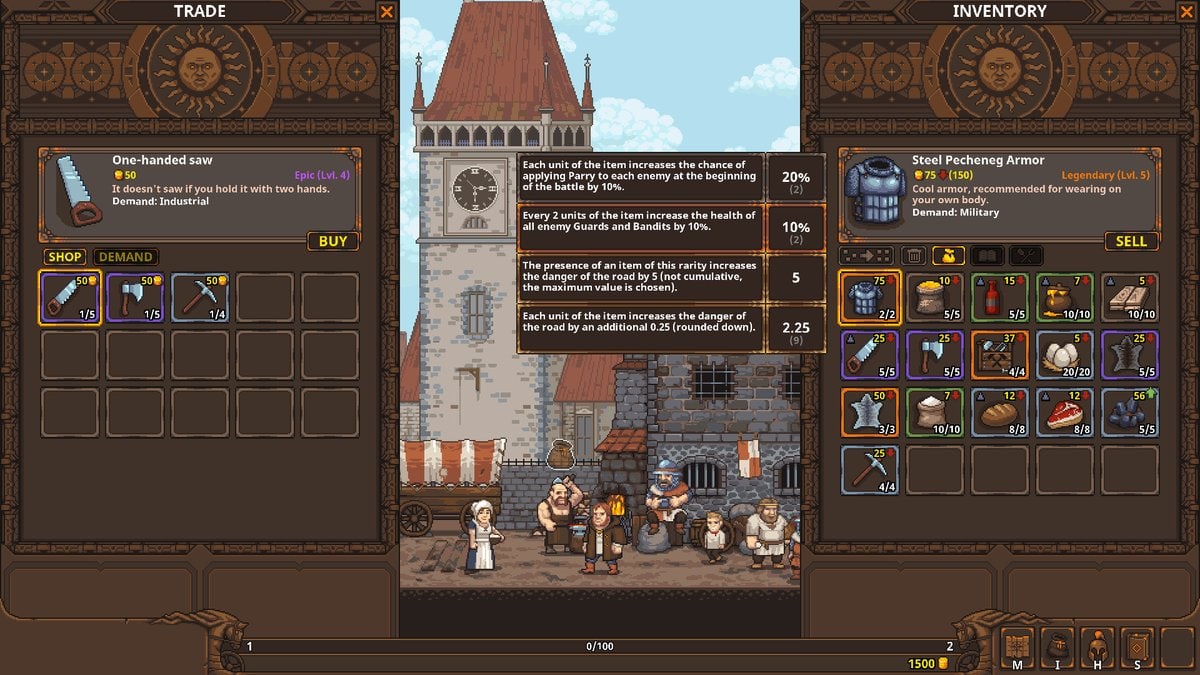
Goods in TRADESMAN: Deal to Dealer are not Pokémon. Each stack is a fight modifier you agreed to. The 1.0 launch notes said there are more than forty types, and every type can raise enemy strength while adding its own buffs. This list ranks stacks by how often they are worth the danger, using live tooltips (Parry openers, Guard/Bandit HP, rarity danger, +0.25 per unit) and demand tags from the trade UI.
Always pair a letter with a town from the trade-route tool and a squad from the mercenary tier list. A military legendary in a fishing village is a bank item, not an S-tier run.
S tier — demand plus honest tooltips
Civilian food: fish, bagged grain, flour, eggs. Low drama, high reputation in people-towns, easy to replace if you flee. Egg crates become a plot bomb on the chicken quest — quests — so keep a spare well.
Planks and tools. They buy cart upgrades and still sell as Industrial. Sacred wells: never dump your last plank into Kirya.
Starter grain. Grandpa’s box. Sell it where he points. Do not romanticise it as an end-game identity.
A tier — money with a warning label
One-handed saws, picks, axes. Industrial/Military staples. Epic saws in the live UI add Parry chance, Guard/Bandit HP, a rarity +5 danger, and per-unit danger. That is an A because the sell price funds scrolls if your lane can eat the buffs. Commons should not escort a full well of them — combat.
Bread, meat, honey, bottled spirits. Industrial-adjacent food/drink. Grubgrog and mill towns move them. Drunk taxi synergy is real and stupid.
Ammunition and mid armor. Military towns and guard camps pay standing. Do not mix with a taxi bench.
B tier — situational banks
Legendary armor (Pecheneg-style plates and friends). Huge Military tag, huge rarity danger. Park it. Drive food. Sell when a capital or camp demand row lights up. Wearing it on the merchant does not cancel the road buffs; the crate still exists.
Ore. Cart recipe fuel. B because the fight traits vary by localisation batch; treat it as a material first.
Random miser swaps. Expected value is “maybe.” Ranked B only because they are free entropy, not because they are a strategy.
C tier — comedy, quest bombs, traps
Anything you bought because the joke was good. The saw that “doesn’t saw if you hold it with two hands” is still an epic danger brick.
Quest-only piles (120 eggs, special boards) during the wrong region. They count as cargo. Thin the profit stacks first.
Four identical high-rarity wells on a peasant squad. This is how 1.0 teaches the rule. The letter is C until the roster matches.
How to shop in sixty seconds
- Read demand, not the biggest gold numeral.
- Hover traits. If you see +5 rarity danger, look at your squad.
- Buy one well, not four.
- Sell into the matching category for reputation.
- Convert profit to scrolls and food, not a fifth well — trading and Getting Started.
Hype (how badly a town wants the good stuff) is real but it is not a license to ignore traits. If a stall is empty, drive. Do not wait in Grampstead for a restock fantasy; this is not an MMO auction.
When ninja patches retune a trait, the tooltip wins. Updates will note economy swings after 1.0. Until then, S means “I would haul this on a common squad,” A means “I would haul this on a rare squad,” and C means “I would haul this for a quest and then I would stop.”
Frequently Asked Questions
Quick answers to the most common merchant questions.
Why does my cheap cart fight like a raid?
High rarity and extra units add danger. Sell down. See combat.
Which goods raise reputation?
The town’s demanded category. Food in people-towns, tools in industrial towns, arms in military camps.
Are there player-to-player prices?
No. Single-player shops only.
Should I keep legendary armor in the cart for stats?
Only if the squad can escort the danger bump. Otherwise bank it and drive eggs.