TRADESMAN Deal to Dealer How Trading Actually Works
Buy the category a town wants. Hover every trait. Never treat cargo as a score counter.
Trading is the whole identity of TRADESMAN: Deal to Dealer, and it is also the difficulty slider. AZAMATIKA’s 1.0 post said it in one line: the more goods you carry, the stronger the enemies, the harder the game. Ninety percent of the time you choose that difficulty yourself. This guide is how you choose on purpose.
The shop window is a combat preview
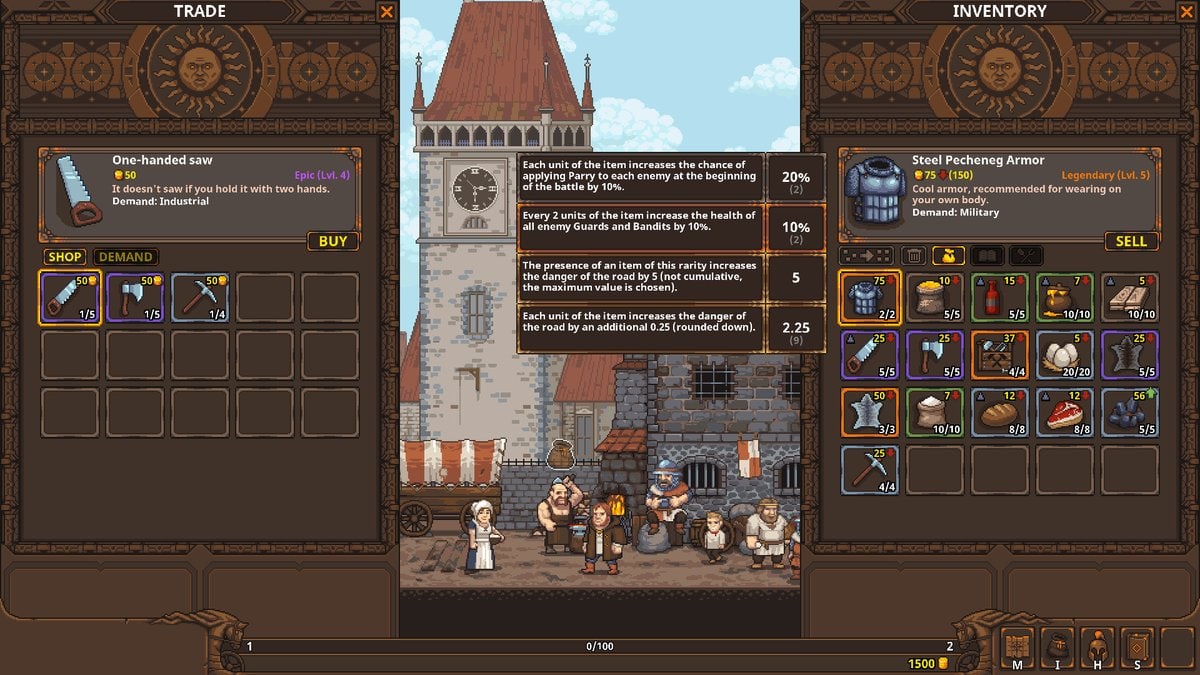
Open a stall and you get a split: Trade on the left, Inventory on the right, the town clock tower in the middle. Each listing shows price, rarity level, a joke tooltip, and a demand tag. Confirmed tags from the live UI include Industrial (one-handed saws, picks, planks, bread, meat, canned honey, bottled spirits) and Military (axes, armor, ammunition). Civilian settlements lean on fish, bagged grain, flour, and eggs — the same basket Furryfoot-style villages pay reputation on. Hover the item, not just the gold number.
A typical epic saw tooltip does four jobs at once:
- Each unit can raise the chance that enemies start the fight with Parry.
- Every two units can pad the health of enemy Guards and Bandits.
- The item’s rarity can add a flat +5 road danger (not summed across types; the game takes the highest).
- Each extra unit adds about +0.25 danger, rounded down.
That is why “I will just fill the cart, danger is a number” fails. Four industrial stacks on a common squad is a boss rush you did not schedule. Rank stacks on the goods tier list and check the combat guide before you copy a high-margin military run.
Demand, hype, and reputation
Towns publish what they want. Selling into that row pays coins and reputation for that settlement. Selling a cousin item in the same category still moves, usually at a worse rate. The UI marks useful sales with simple shapes (squares, triangles, circles) so you can scan without a spreadsheet. Reputation is a long track — historically 10,000 for the unique pillar reward. During 2025 the studio doubled reputation gains, so the cap is the same number with less busywork. Rewards include extra scroll/food slots, unique goods, legendary mercenaries, or squad-wide books. Full loop: reputation.
Do not assume every high-price good is a high-reputation good. A legendary armor piece with Military demand is useless in a fishing village except as a bank. Park it. Drive the food. The trade-route tool lists early loops: seafood out of Fishpool, tavern freight around Grubgrog, basics into Hoboken, and capital sinks in Normingham.
How much you can actually haul
Carry weight is not just cart size. Squad level and rarity set how many stacks you can move safely. A full team of commons is honest at one stack. Overload events and road encounters scale faster than your HP bar. Extra ware slots come from Leadership talents and from some reputation books — see talents and carts. If the whole squad flees, you lose a couple of units from each stack. Plan a “loss budget”: never carry the only copy of a quest board or a cart-upgrade material you cannot replace this side of the map.
Pricing habits that keep you solvent
- Leave Grampstead with a coin buffer. The beginner guide exists because empty wallets cannot hire a replacement peasant after a wolf.
- Buy where the tooltip is boring. Low rarity plus matching demand is how you fund better mercenaries, not how you show off.
- Sell where the demand row lights up, even if the road is one town longer.
- Convert profit into scrolls and food, not a fifth mystery crate. Mercenaries only level on rarity-matched scrolls; they can now hold two different scrolls. Food is cooking — squad builds.
- Watch Kirya the Miser and other random traders. They swap junk for junk. Sometimes you break even. Treat them as entertainment until you are rich.
Region gates are economy gates
Some bricks on the map are reputation locks, not level locks. Beastborough wants max standing in Furryfoot Village before the red brick opens. Snow regions and cemetery roads hide epic moles, paladins, and later Wasteland content — Wasteland and quests. You do not “out-level” a gate by stuffing military goods; you out-trade it.
Workshop and 1.0 both kept Steam Cloud, so you can experiment on a backup save. If a ninja patch retunes a trait (Hunter scrolls were nerfed once already), reread the tooltip, not last month’s memory. Official patch blogs sit on updates. When you are ready to spend the profit, hire from the mercenary tier list instead of the first named NPC who yells.
Trading well feels quiet. The cart is half empty, the demand row is green, and the wolf that spawns is a wolf, not a parade. That is the skill. Everything else is comedy dialogue.
Frequently Asked Questions
Quick answers to the most common merchant questions.
Why are my road fights suddenly brutal?
You are carrying more, or rarer, goods. Rarity can add a flat danger bump and each unit adds more. Thin the cart or upgrade the squad — combat.
Do item traits hurt my mercenaries?
No. The listed combat traits buff the enemies and the road, not your team. That is the joke and the design.
How do I raise town reputation fast?
Sell the settlement’s demanded category. Gains were doubled during Early Access, but the 10,000 reward cap remains. See reputation.
Is there a player auction house?
No. This is a single-player sim. Prices are town inventories, not other players.